
DigiLink case study
DigiLink Explained
DigiLink was established by Harambee as a not-for-profit, tech-focused work-integrated learning programme. Its purpose was to provide a solution that connects employers with supervised, entry-level digital talent to augment and support their digital delivery teams while bridging the skills gap and bringing young people into the economy.
DigiLink opened two outsourced digital intern centres in Johannesburg and Cape Town, served several enterprise-sized employer partners and produced 160 work-ready candidates for absorption into the workplace.
This 12-month outsourced internship model of work-integrated learning proved to be incredibly successful with a 90% absorption rate post the completion of the internship year.
The success of the DigiLink model was a pivotal factor in the creation of Collective X, demonstrating that work-integrated learning could effectively bridge the gap between digital skills training and employment.
This proven approach became a cornerstone of Collective X’s change strategy, embedded within the National Digital Skills Plan as a key pillar for transforming how digital skills development and job placement occur in South Africa.
Building on DigiLink’s foundation, Collective X now promotes WIL implementation across its entire ecosystem, recognising that combining academic learning with practical, paid work experience significantly increases graduate success rates when transitioning into the digital workforce.
How DigiLink Worked
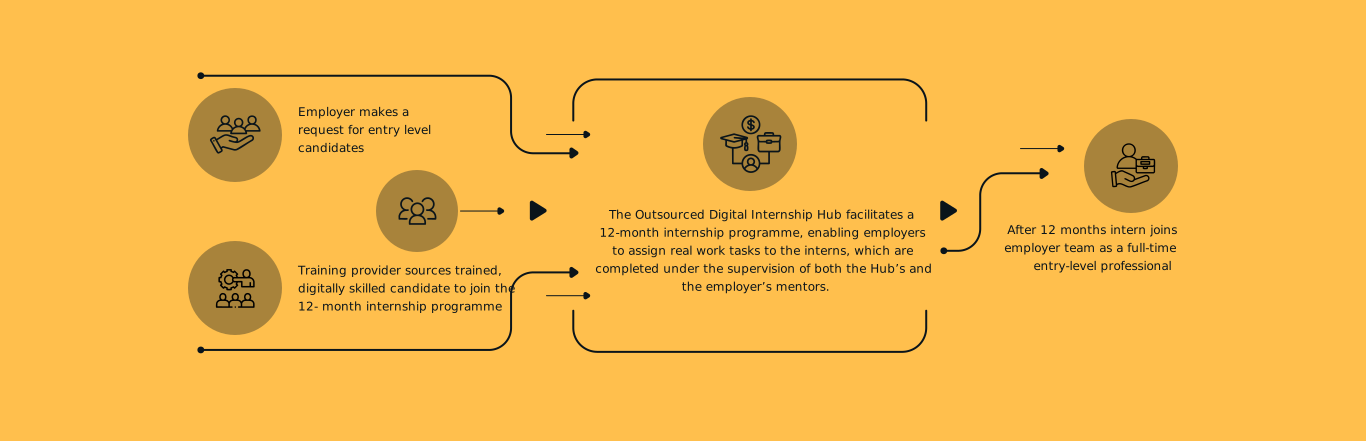
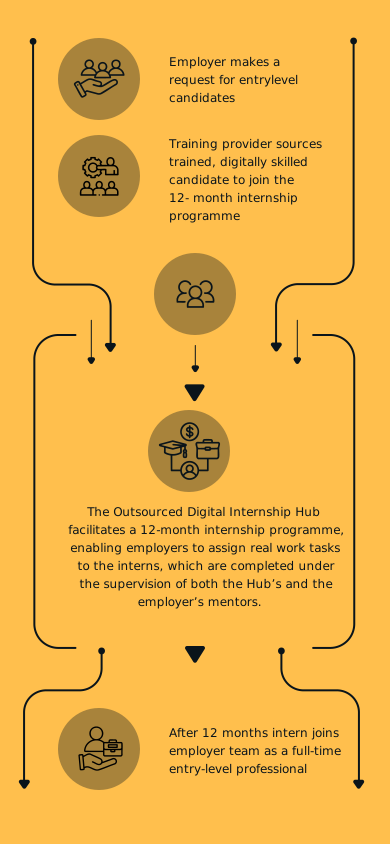
The DigiLink model provided a managed service to help businesses recruit and select young, qualified digital talent, primarily in software testing, development, data analytics and software support functions and then support and manage them to work-readiness and technical work delivery through an outsourced work-integrated learning internship before absorbing them into their own workforce.
After building a detailed understanding of the technical role of the client, through a diagnostic session, DigiLink sourced graduates from universities, private institutions, and skill accelerator programmes, selecting those who already possess strong digital skills and potential.
DigiLink then placed these candidates in a real-world, in-person office space where they are onboarded into the employer’s digital environment. Interns were placed in client feature teams where they worked on actual business deliverables.
This service was designed to be low-risk for businesses, offering a cost-effective way to access junior talent that is effectively supported to be work-ready, without the financial and management costs of building in-house graduate internship programmes.
The DigiLink model covered any one of the following five job functions or services provided to the market:
- QA and software testing
- Software development
- Data Preparation, Analysis and Modelling
- Vendor SaaS, PaaS and IaaS configuration and SLA support services for all major cloud providers
- Infrastructure support
Your WIL programme
Building Your Own WIL Programme
Key Success Factors
As you begin to plan your own WIL model, these are the critical factors that will help to ensure that your programme thrives.
Sourcing sufficient demand for financial viability
Using the right assessment tools for candidate recruitment
Internship is about real world tasks from employers
Availability of technically skilled mentors and leaders
Ensuring a focus on soft skills required for the world of work
Psychosocial support to build candidate confidence and ability to transition